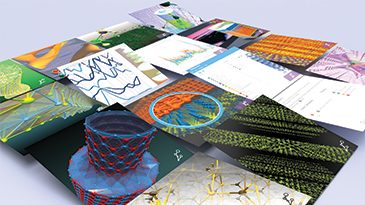
Atomistix ToolKit (ATK) is currently being used by a large number of industrial and academic researchers in a wide variety of application areas, such as
Carbon nanotubes are, next to molecular electronics, the most common application area for the QuantumWise software. Both academic research and industrial R&D groups use the products extensively to investigate various aspects of nanotubes, ranging from basic properties to specific device applications like diodes, switches, and sensors.
ATK in Education: Concepts of professional atomic-scale modeling
ATK is an ideal tool for demonstrating the principles of atomic-scale modeling in general, and transport studies in particular. The students can become acquainted with a professional atomic-scale modeling tool, and can get to grips with some of the fundamental challenges in the work-flow:
Constructing a model for the problem at hand
Setting up a corresponding geometry to represent the model
Optimizing the structure, if needed
Choosing a numerical model and the relevant parameters for it
Post-processing and analysis; computing and visualizing observables
Assessing the quality and reliability of the computed results
In addition, in advanced classes one can naturally introduce the students to the concepts of quantum transport calculations - the speciality of ATK!
Make connections with simple models by looking at perfect nanotubes or linear metallic chains
Introduce defects and study their influence on the transmission
Go beyond the basics and study current-voltage characteristics of molecular electronic systems, tunnel-magnetoresistance in magnetic tunnel junctions, rectification in graphene nanoribbons
And much more!
Moreover, Python is become a very popular language within physics and chemistry. By inspecting the input scripts the students can quickly learn the basic syntax and semantics of Python, and get started developing more advanced geometry setups and analysis functions.
Working with ATK also provides a simple way to go beyond the basic toy models in the teaching of fundamental quantum mechanics, and instead study realistic atomic systems. Moreover, there are ample chances for discussion in class the basic concepts of density-functional theory, and how these may influence the quality and reliability of the results.
ATK in Education: Nanotubes & Graphene
Carbon nanotubes and graphene are ideal systems for demonstrating basic principles of both electronic structure and quantum transport. Their 1D and 2D structures provide foundations for discussions of k-point symmetries etc, and both electronic and transport characteristics can be compared to simple models. Both metallic and semiconducting behavior can be observed and discussed.
The structures are relatively cheap to calculate in ATK by using semi-empirical tight-binding models, and the results can then be compared to more general DFT calculations. Complex geometries, such as Stone-Wales defects or edge roughness in graphene nanoribbons, needs to be optimized first, and this can be done easily and extremely fast by the Brenner potential. See the movie to the right!
Nanotubes of any chirality, and endless variations on graphene nanoribbons can easily be built in VNL; see the figures below, as well as the page on graphene applications with ATK for more inspiration! Why limit yourself to carbon - it's just as easy to set up and calculate a boron-nitride or SiC tube, and for very interesting reasons they have quite different properties.
To get started on this topic in course-work, there are several prepared detailed tutorials on graphene that provide an excellent starting point. and thanks to the ways the GUI can be extended it is easy for a course instructor to provide the students with ready tools to create for specific structures. As an example, there is a plug-in tool which computes an analytic tight-binding band structure of carbon nanotubes. Then, the students can quickly set up the system and calculate the full DFT band structure (or use extended Hückel theory) with just a few mouse clicks and compare it to the simpler models. After that, introduce doping or defects to see how this influences the band structure - or the transport characteristics.
Another interesting exercise is to compute and visualize the Bloch functions in a nanotube or a graphene ribbon, with or without spin polarization, and relate its symmetries to the characteristic of each band (s-type, p-type, px vs pz, etc).
ATK in Education: Crystals
Use ATK and VNL to study the electronic properties of crystals and other periodic structures. You can access the database of pre-built materials or build your own from scratch. Calculate basic properties such as the band structure with a few simple clicks. You can even compute and visualize Bloch functions!
By complementing the built-in functionality with custom-made NanoLanguage scripts, the students or their teacher can go beyond the basics and study for instance
density of states
supercells
forces, stress, and the equation of state
effective mass/curvature of bands in semiconductors
dopant energy levels in semiconductors
energy barriers for diffusion of dopants, using the transition state algorithm in ATK
etc...
ATK in Education: Molecules
Building simple - and advanced - molecules in the Molecular Builder couldn't be easier! Start with a basic structure from the Molecular Cupboard (or from scratch), then add side-groups and replace individual atoms with simple operations. At each step, VNL will automatically adjust bond length and angles according to the specified hybridization, and also add and remove hydrogen atoms as needed. At the same time, the user has full control of the geometry via the Geometry Manager, where you can control the bond order, rotate bonds and groups, stretch bonds, etc, etc.
From that point it's just a few simple drags and clicks with the mouse to compute and visualize the full DFT molecular spectrum, molecular wave functions, the electron density, or the effective potential.
On a more advanced level, students can study transition states and activation energies for basic chemical reactions or catalytic reactions on surfaces, using the nudged elastic band module in ATK.
One of the hottest and latest research trends in nanotechnology is studies of graphene for a multitude of applications within nanoelectronics and other related areas. Researchers around the world, both in academic and industrial R&D departments, are using QuantumWise software extensively to investigate this material and develop future devices based on various types of graphene structures.
Atomistix ToolKit (ATK) allows researchers to focus on the relevant points for their projects, namely the investigation of the electrical properties of novel device structures, rather than spending time writing their own quantum-mechanical codes for the simulation, or struggling with data import/export to visualize the results.
ATK offers many features that are of particular importance for graphene studies.
No software package integrates as many different methods as ATK. For graphene, you can perform quantum-mechanical calculations using
DFT
DFTB
Tight-binding (with possibility to add user-defined models)
Extended Hückel
and additionally also perform ultra-fast geometry optimizations or molecular dynamics simulations using the classical Brenner potential.
Dim lights Movie showing a relaxation of a "flower defect" in graphene, using the Brenner potential.
The effects observed in graphene structures are often an effect of the shape, rather than the detailed chemistry. Hence even simple methods can predict many properties accurately. On the other hand, certain applications like gas sensing, or metal/graphene contacts, require a detailed quantum-chemical description of the interactions between molecules or other materials, and graphene. Having access to a wide variety of methods in a single tool makes working with ATK efficient and flexible, since you don't have to spend time learning several interfaces, transferring structures between different input formats, etc.
All methods in ATK are accessed via a common interface, making it very convenient to switch between different methods to compare the results (accuracy etc). Depending on the selected method, calculations can be performed on structures with several hundred (DFT/DFTB and Hückel) to tens of thousands (tight-binding) of atoms. These methods can be used to compute a wide variety of properties of both simple periodic graphene and more complex device-like geometries.
Electronic structure properties like band structure, density of states, real-space density, Bloch states, and other relevant quantities
Transport properties at finite bias via non-equllibrium Green's functions
Current-voltage (I-V) curve
Transmission spectrum
Conductance
Voltage drop
Transmission eigenstates and pathways
Transistor characteristics Insert metallic gates and dielectric screening regions (figure to the right below), and compute the
on/off ratio
subthreshold swing
Thermoelectric properties
Seebeck coefficient
Thermionic emission current
Optical properties
Absorption spectrum
Dielectric constant
Refractive index
Mechanical properties
All of the above properties can also be computed with added collinear spin-polarization, thus you can compute e.g. spin currents and magnetoresistance.
Setting up the geometric structures of the systems to be studied is easy in the graphical user interface (GUI) Virtual NanoLab (VNL), which has dedicated tools to generate and manipulate graphene sheets, nanoribbons, etc. It is for instance simple to passivate the edges of a ribbon, or interactively introduce defects, dopants or vacancies. The GUI also provides a user-friendly interface to set up the numerical parameters of the calculation, and to plot and analyze the results.
Applications
Using the features outlined above, researchers have applied ATK to many different structures involving or related to graphene:
graphene nanoribbons (GNR)
infinite graphene sheets
crossed nanoribbons, junctions of various shapes (T-shaped, Z-shaped)
imperfections in the form of constrictions, V-shaped notches, vacancies, Stone-Wales defects, divacancies, etc
monolayer, bilayer, trilayer graphene
triangular flakes and other finite structures
corrugated sheets and ribbons
strained or disordered structures
One is not limited to pure-carbon systems; many important device ideas come from introducing dopants in GNRs, and functionalization by covalently or non-covalently bonded molecules and ad-atoms can lead to important modifications of the electronic properties that can be used to construct tailor-made device characteristics. In many device structures the source and drain electrodes are metal surfaces (gold, nickel, aluminium, etc), and junctions can also be formed with boron-nitride ribbons or sheets, carbon nanotubes (CNT), nanowires, atomic chains, and other nanoscale structures.
Carbon is not the only element that can form regular, hexagonal monolayer structures. Examples of interesting such materials that can be studied with ATK, and which have both very different and similar properties, are boron-nitride (BN), zinc-oxide (ZnO), silicene (Si), and molybdenite (MoS2). We can in this context also mention the closely related materials graphane and graphone. Moreover, the properties of graphene are closely related to carbon nanotubes, which is another very active application area for ATK.
Examples of graphene device ideas studied with ATK
Bipolar field-effect transistors, diodes, switches, and rectifiers
Edge doping/vacancies and other types of defects can be used to obtain a p-n heterojunction
Shape control can also be used to create a metal-semiconductor-metal junction, resonant tunneling diode structures, etc
Negative-differential resistance (NDR) can be observed in many different geometries
Metallic gates can be introduced to control the effective potential in the switching region
Spintronics devices
Spin filter effects in graphene nanoribbons, induced by impurities (magnetic or non-magnetic), or edge defects
Spin logic gates
Magnetic tunnel junctions (MTJ), for instance based on metal-graphene junctions with nickel
Sensors
Detecting trace amounts of gases - defect sites with dangling bonds form sites with strong binding, even for small molecules like CO, NO or NO2
DNA sequencing or base pair detection
Thermoelectric (caloritronic) devices
Thermally induced currents
Themionic emission, band-to-band tunneling
Nanoelectromechanical systems like ultra-sensitive force sensors based on bilayer graphene
Each of these topics has been studied in one or more published articles. Abstracts and links to the full text can be found in the searchable ATK publication list.
Tutorials
If you are interested in studying graphene with ATK, an excellent starting point will be our tutorials. These cover a range of topics, from basic band structure calculations of graphite to transport analysis of graphene nanoribbons. Using the graphical user interface, sometimes combined with NanoLanguage scripts, makes it efficient and easy to set up even advanced geometries like a z-shaped junctions between armchair/zigzag nanoribbons efficiently and easy.
The search for new non-volatile memory technologies is a very intensive research area today. A promising candidate is magnetic RAM (MRAM), and several academic groups and electronics companies are using Atomistix ToolKit (ATK) from QuantumWise for different stages in the analysis of new materials for MRAM structures. ATK is a very popular tool within the entire general area of spintronics, for studies of various novel applications and devices where the information is carried not by the electron charge, but by its spin.